
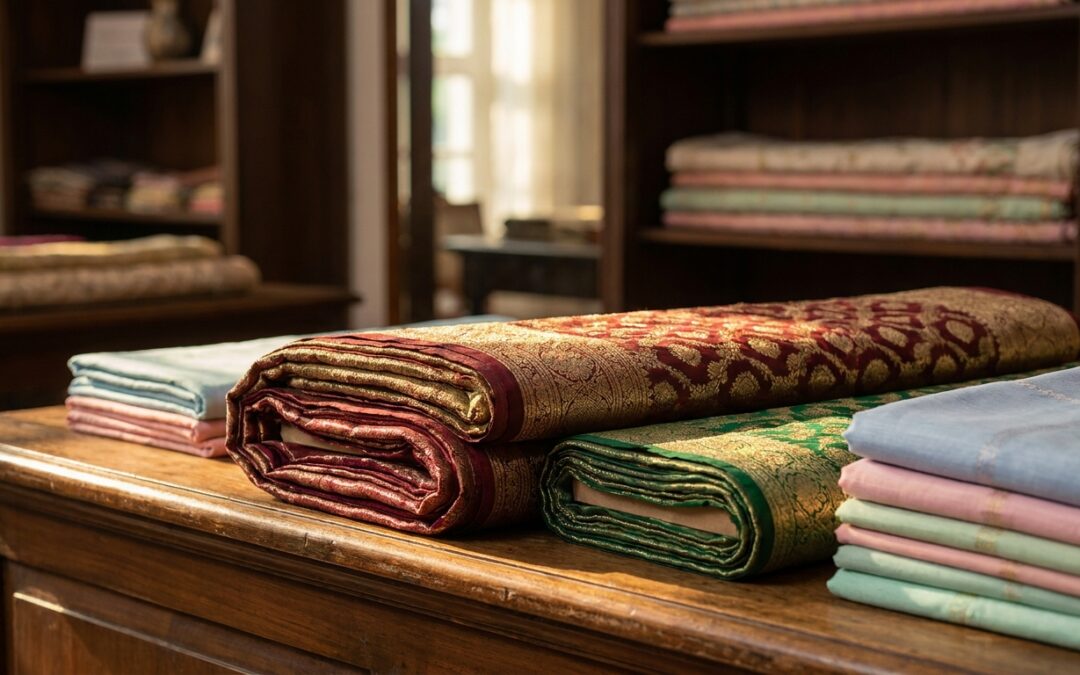
Choosing the right fabric for your boutique is the decision that determines everything downstream. Every boutique lives or dies by the quality of its fabric sourcing. A well-cut design in a poor fabric photographs badly, drapes awkwardly, and rarely earns repeat customers. A modest design in the right fabric, on the other hand, sells itself. For boutique owners and designers building a collection — whether for bridal wear, festive orders, or everyday ethnic staples — fabric selection is the decision that determines margin, client satisfaction, and how the finished garment actually behaves on a real body.
At Rupam Sarees, we have supplied fabric to boutiques, tailors, and designers across Chennai for over four decades. This guide sets out how experienced buyers actually choose fabric — not from a catalogue photo, but from the trade floor.
Contents
- 1 How to Choose Fabric for Your Boutique: Where to Start
- 2 What Fabric Is Best for Bridal Lehengas vs Everyday Wear?
- 3 What’s the Difference Between Banarasi, Kanjivaram, Tissue, and Organza Silk?
- 4 How Much Fabric Is Needed for a Blouse, Lehenga, or Saree?
- 5 Reading Quality Before You Commit to a Bulk Order
- 6 Buying Seasonally and Managing Margins
- 7 Where Can Boutique Owners Buy Wholesale Designer Fabric in Chennai?
How to Choose Fabric for Your Boutique: Where to Start
Experienced boutique owners choose fabric by matching it to the garment’s construction first — its weight, drape, and stiffness — rather than choosing a fabric name and hoping it performs. The most common mistake new buyers make is falling in love with a fabric before knowing what it will become.
- Structured garments (blouses, jackets, corsets) need body — raw silk, dupion silk, and brocade hold shape without additional lining.
- Flowing garments (lehengas, gowns, dupattas) need drape — georgette, chiffon, and soft silk blends fall naturally instead of standing away from the body.
- Bridal and festive pieces need presence — Banarasi silk, tissue, and gaji silk catch light and read well in photographs, which matters as much as the fabric feels in hand.
Buy against the garment brief first. The fabric name comes second. If you are also weighing how much of your collection should be made-to-order, our comparison of custom-made vs ready-made clothing covers the trade-offs for designers.
What Fabric Is Best for Bridal Lehengas vs Everyday Wear?
Bridal fabric is chosen for richness, weight, and how it photographs — Banarasi silk, tissue, and heavily embellished georgette — even at the cost of easy maintenance. Everyday fabric is chosen for comfort and washability instead, using cotton silk blends, crepe, and satin.
Bridal and festive fabric — Banarasi silk, Kanjivaram-style silk, tissue, and heavily embellished georgette — is chosen for richness, weight, and photographability, even at the cost of easy maintenance. Customers accept dry-cleaning and careful storage in exchange for how the piece looks on the day. Everyday and semi-formal fabric — cotton silk blends, soft georgette, crepe, and satin — is chosen for comfort, washability, and consistent behaviour across repeated wear. A boutique’s bridal section and its daily-wear section should be sourced from entirely different fabric logic, not variations of the same stock.
What’s the Difference Between Banarasi, Kanjivaram, Tissue, and Organza Silk?
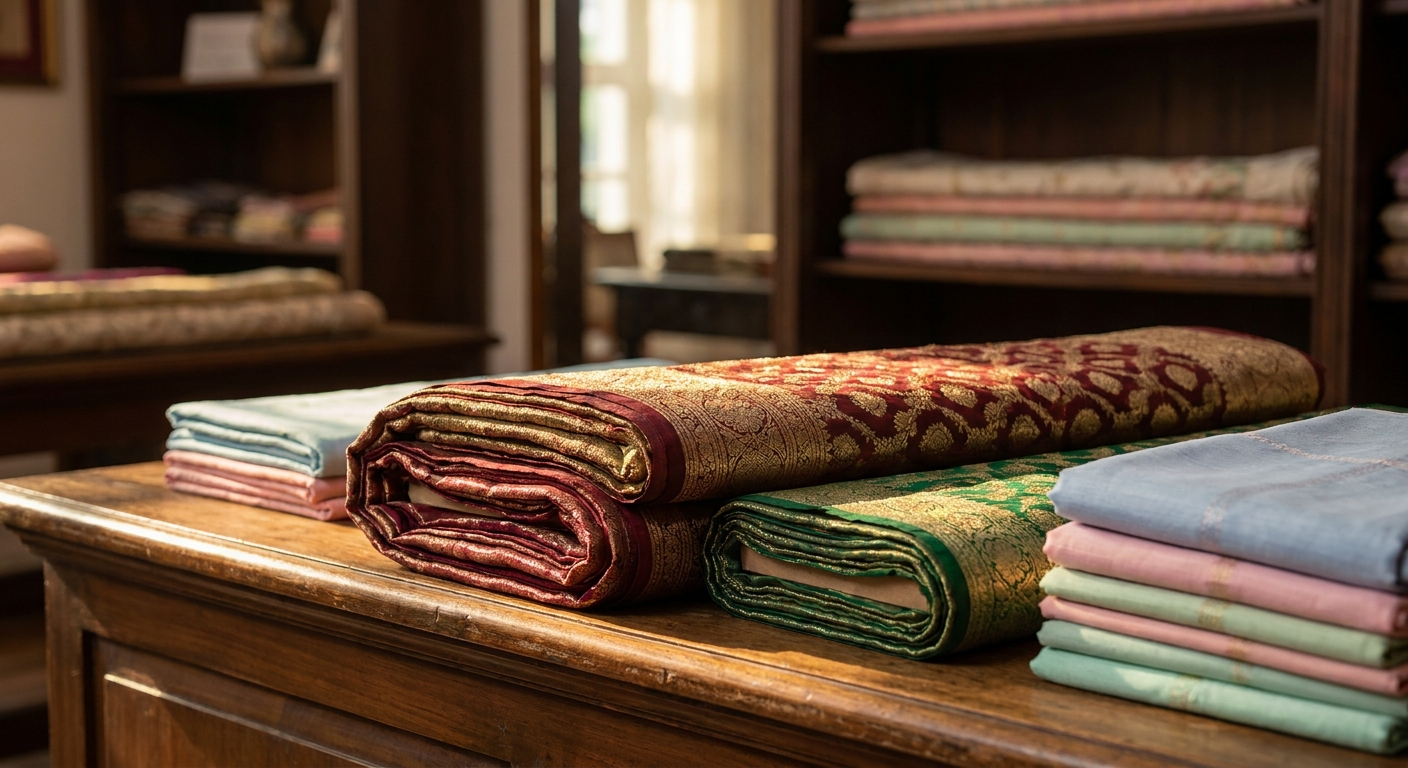
Banarasi silk has zari brocade woven into the fabric itself; Kanjivaram-style silk is thicker and matte with a contrast border; tissue silk is lightweight with a metallic sheen through the weave; organza is sheer and crisp. Each suits a different garment, not an interchangeable “silk” category.
Boutique owners are frequently asked to tell one silk from another, and vague answers cost trust. A few working distinctions matter more than technical jargon:
Banarasi silk is defined by its brocade weave — gold or silver zari worked directly into the fabric, not printed on. It is heavier, structured, and suited to lehengas, heavy blouses, and bridal dupattas.
Kanjivaram-style silk is a thicker, more matte silk with a distinctive contrast border, traditionally associated with South Indian bridal and temple wear. It holds pleats firmly, which matters for saree draping.
Tissue silk is lightweight with a metallic sheen running through the weave itself. It suits overlays, jackets, and contemporary indo-western pieces where a subtle shimmer is wanted without the weight of brocade.
Organza is sheer, crisp, and holds volume without heaviness — the reason it dominates modern lehenga and gown silhouettes that need structure without bulk.
Knowing which of these a client’s brief actually calls for — rather than defaulting to “silk” as one category — is what separates an experienced boutique from a new one.
How Much Fabric Is Needed for a Blouse, Lehenga, or Saree?
A blouse typically needs 1 to 1.2 metres, a saree with an unstitched blouse piece needs 5.5 to 6.5 metres total, a lehenga needs 5 to 7 metres depending on flare, and a salwar suit top needs 2.5 to 3 metres. Always add a small buffer beyond these figures.
Under-ordering fabric mid-season is one of the most common and avoidable losses in the trade. As a working reference for standard adult sizing:
- Blouse: 1 to 1.2 metres, plus extra for high necklines, full sleeves, or heavy embellishment matching
- Saree with unstitched blouse piece: 5.5 to 6.5 metres total
- Lehenga: 5 to 7 metres depending on flare, layering, and whether a separate lining fabric is used
- Salwar suit set: 2.5 to 3 metres for the top, plus bottom and dupatta fabric separately
Always buy a small buffer beyond the calculated requirement, especially for bridal orders — pattern matching, print placement, and alteration margins consume more fabric than first estimates suggest.
Reading Quality Before You Commit to a Bulk Order
Photographs and swatches sent over WhatsApp cannot tell you everything. Before confirming a wholesale order, check:
- Dye-fastness — rub a corner of the fabric firmly against a white cloth; colour transfer signals a dye that will bleed in wash or under sweat, a serious risk for bridal orders with layered fabrics.
- Weave density — hold the fabric up to light; a loosely woven fabric will show visible gaps and wear thin faster.
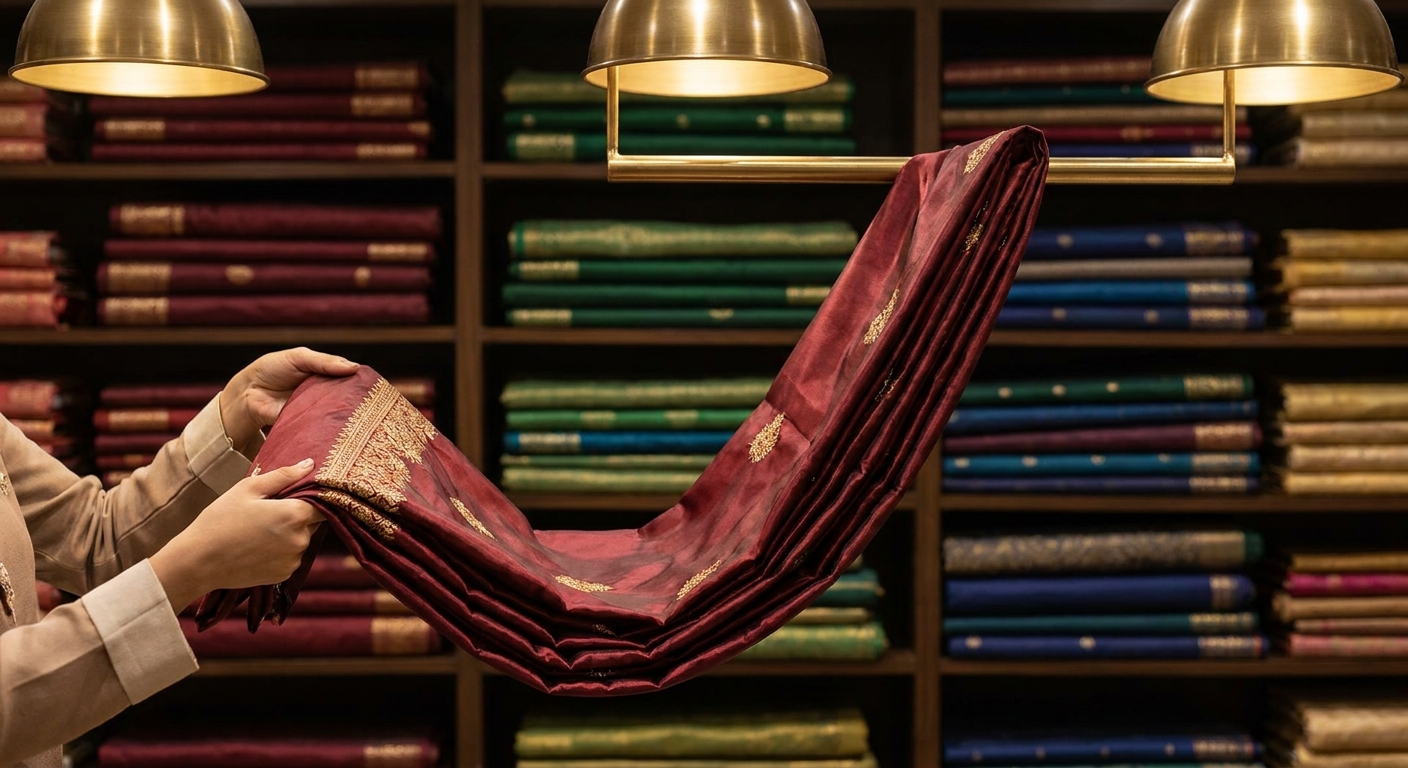
- Drape test — let a metre of fabric hang freely rather than judging it flat on a table. This is the single best predictor of how a finished garment will actually move.
- Zari quality — genuine zari work has a slightly raised, textured feel; printed or foil imitations lie flat and dull quickly with washing.
A supplier who allows you to physically inspect fabric before a bulk commitment — rather than insisting on advance payment against photographs alone — is one worth building a long-term relationship with.
Buying Seasonally and Managing Margins
Wedding season (October to February) and festive season (August to November) drive demand for bridal-weight silks, tissue, and embellished fabric — boutiques that stock these categories early, rather than reactively, capture better pricing and wider colour availability. Off-season months are the right time to build stock in cotton silk, crepe, and daily-wear georgette, where demand is steadier and margins are more predictable.
Buying in useful, moderate quantities rather than either overcommitting to trend fabric or underbuying staples is what keeps a boutique’s working capital healthy through the year. Planning fabric for your boutique around these two demand cycles, rather than reacting to them, is part of that discipline. For a wider map of where Chennai’s trade actually shops, see our guide to Chennai’s best fabric stores.
Where Can Boutique Owners Buy Wholesale Designer Fabric in Chennai?
Rupam Sarees, on Mint Street, Sowcarpet, has supplied wholesale and retail designer fabric to Chennai’s boutiques, tailors, and designers for more than 43 years — with in-person inspection before bulk orders and shipping across India and internationally.
Rupam Sarees has supplied designer and daily-wear fabric to boutiques, tailors, and designers from Mint Street, Sowcarpet, Chennai, for more than 43 years — the same heritage that has made us Chennai’s preferred choice for custom-made outfits since 1983. We stock Banarasi silk, tissue, organza, gaji silk, Chanderi, georgette, and hundreds of plain fabrics for colour and print matching — available at both wholesale and retail quantities, with custom-made outfits stitched from scratch when a client brief calls for it.
We ship across India and internationally, and we welcome boutique owners and designers to inspect fabric in person before committing to a bulk order — the same trust our store has built with Chennai’s trade for four decades.
To discuss a wholesale order, a bridal-season fabric plan, or a custom outfit brief for your boutique, visit us on Mint Street or reach out through our website to start a conversation.